
Inclusive Leadership: Navigating Organisational Complexity book review
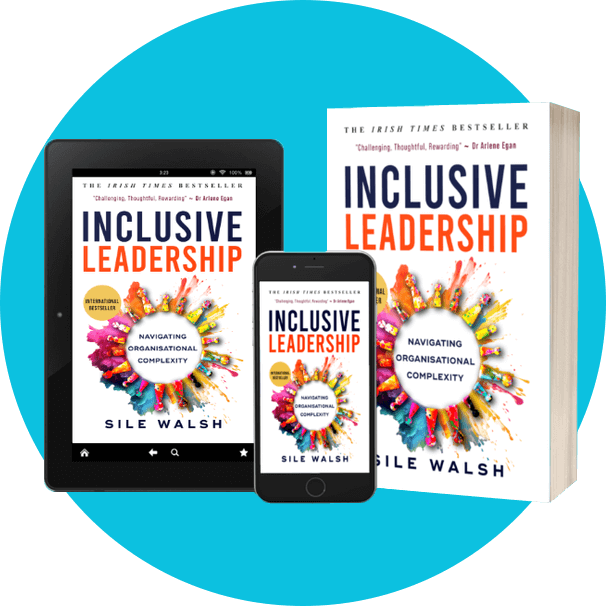
What does it actually take to lead inclusively, not in theory but in the messy reality of organisational life? Inclusive Leadership: Navigating Organisational Complexity by Sile Walsh answers that question with uncommon clarity. This 294-page book, with chapter contributions from Dr Liz Wilson and Lynn Killick, reframes inclusion as both a performance driver and a fundamental human need. It moves beyond aspirational statements to offer leaders a concrete, evidence-based framework for embedding inclusive practices into how organisations actually operate. For anyone leading teams, designing learning programmes, or coaching leaders through complexity, this book is a practitioner's companion not a compliance manual.
Operationalising Inclusion for Organisational Performance
Organisations invest heavily in inclusion initiatives, yet many leaders still struggle to translate good intentions into measurable outcomes. Drawing on research from organisational psychology and leadership studies, the book presents compelling evidence that inclusive teams show stronger psychological safety, higher retention, greater innovation, and more effective decision-making (Walsh, 2024). Yet most organisations struggle to translate these findings into practice. The gap between knowing inclusion matters and operationalising it remains wide.
This book addresses that gap directly. Rather than offering a checklist of behaviours to perform, it equips leaders with a framework, the Include-Performance Framework™ that connects inclusive practice to organisational performance in concrete, measurable ways. The result is a resource that speaks to the reality leaders face: competing priorities, systemic constraints, and the human complexity of building cultures where people genuinely thrive.
Core principles from the book
The book is structured around the 13 Inclusive Leadership Practices and Principles, each designed to be actionable in real organisational conditions. Here are key principles that stand out for practitioners:
1. Move from rules to principles
The book challenges the tendency to reduce inclusion to a set of compliance rules. Instead, it argues for principle-based leadership, where leaders develop the judgement to navigate novel situations rather than relying on scripted responses. For example, a leader managing a restructuring can use principles to make context-sensitive decisions about communication and support, rather than following a one-size-fits-all policy.
2. Understand inclusion as multidirectional
Inclusive leadership is not something done to others. The book presents a multidirectional model that accounts for individual, relational, organisational, and external influences. This means a HR director designing a wellbeing programme would consider not only individual employee needs, but also team dynamics, organisational culture, and industry-wide pressures all simultaneously.
3. Shift from fear to freedom
Many leaders approach inclusion from a position of anxiety, fear of saying the wrong thing, of getting it wrong publicly. The book reframes this, moving leaders from fear-based avoidance to principled, confident action. A practical example: a team leader who previously avoided difficult conversations about performance across difference can develop the skill of compassionate accountability addressing issues honestly while maintaining trust.
4. Operationalise inclusion through the Include-Performance Framework™
This is the book's central contribution. The Include-Performance Framework™ provides a structured way to connect inclusive practices directly to organisational performance outcomes. Rather than treating inclusion as a separate initiative, the framework embeds it into existing leadership and operational processes. For a consultant working with a client organisation, this framework offers a diagnostic lens: where is inclusion already driving performance, and where are the gaps?
5. Embrace complexity rather than simplifying it
The book does not offer easy answers. It acknowledges that organisational life is complex, and that effective inclusive leadership requires holding multiple perspectives, tolerating ambiguity, and making decisions without perfect information. A coach working with a senior leader, for instance, can use the reflective exercises in the book to help that leader examine their assumptions and expand their capacity for navigating competing demands.
6. Move from surviving to thriving
The book distinguishes between organisations that merely survive diversity challenges and those that actively create conditions for people to thrive. This is not abstract, it connects thriving to specific leadership practices and team outcomes, offering leaders a pathway from reactive crisis management to proactive culture-building.
As you consider these principles, ask yourself: Where in your current role are you defaulting to rules-based responses rather than principle-based judgement? Which of the four influences, individual, relational, organisational, or external, do you tend to overlook when making leadership decisions?
Common challenges and misconceptions
One of the book's most valuable contributions is how it surfaces what leaders consistently get wrong about inclusion.
The most persistent misconception is that inclusion is primarily a compliance exercise, something organisations do to meet legal requirements or avoid reputational risk. The book dismantles this framing comprehensively. When inclusion is treated as compliance, it becomes a box-ticking exercise that fails to change how people actually experience work.
Another common challenge is the assumption that inclusive leadership is about individual behaviour change alone. In reality, systemic and relational factors, organisational design, power structures, team norms, shape inclusion far more than any single leader's intent. The book's multidirectional approach addresses this directly, asking leaders to examine the systems they operate within, not just their personal conduct.
Leaders also tend to underestimate the role of discomfort in inclusive practice. The book frames discomfort not as a sign of failure, but as an inherent part of growth, a signal that assumptions are being challenged and new understanding is emerging.
The ELIS Advantage perspective
We developed the Include-Performance Framework™ and the 13 Inclusive Leadership Practices and Principles because we saw a fundamental gap in how organisations approach inclusion. Too often, the conversation stops at awareness. This book is our response: a resource that helps leaders move from awareness to action, from intention to impact.
At ELIS Advantage, our methodology is grounded in coaching psychology, organisational development, and over a decade of working with leaders across sectors. Inclusive Leadership: Navigating Organisational Complexity reflects that experience, it is written for the conditions leaders actually face, not the conditions we wish they faced.
For those who want a concise companion, the Inclusive Leaders Pocket Guide distils key practices into a format designed for everyday reference. Together, the book and the pocket guide offer a complete toolkit for leaders committed to building organisations where inclusion drives performance and human flourishing.
Inclusive Leadership for Real Organisational Complexity
Inclusive Leadership: Navigating Organisational Complexity is not another book about why inclusion matters, it is a book about how to make it work. For leaders, HR professionals, and coaches navigating the real complexity of organisational life, it offers what most resources do not: a structured, evidence-based framework that connects inclusive practice directly to performance outcomes. If you are ready to move beyond awareness and into action, this book is where to start.
Inclusion is a performance and human need, framing it as compliance alone undermines both its impact and its sustainability.
The Include-Performance Framework™ provides a structured, evidence-based approach to embedding inclusion in organisational operations.
The 13 Inclusive Leadership Practices and Principles offer concrete, actionable guidance for leaders navigating real-world complexity.
Effective inclusive leadership is multidirectional, it requires attention to individual, relational, organisational, and external factors.
Discomfort is part of the process; moving from fear to freedom is a central leadership development challenge the book addresses directly.
Reference
Walsh, S. (2024). Inclusive Leadership: Navigating Organisational Complexity. With chapter contributions from Dr Liz Wilson and Lynn Killick.