
The Best books on Inclusive Leadership in 2025 and 2026: What the best ones actually do differently
The best books on inclusive leadership do more than define inclusion or list behaviours to adopt. They examine how leadership, organisational systems, and human psychology interact to either enable or undermine inclusive performance. The strongest titles on this topic share a common thread: they treat inclusion not as a programme to implement but as a capability to build, one that is inseparable from how effectively an organisation functions. Below, we evaluate key books through the lens of what actually shifts organisational culture, not just individual awareness, drawing on criteria from our work with over 25,000 leaders internationally.
Why the right reading matters for Inclusive Leadership
Reading about inclusive leadership is not, on its own, a development strategy. But the right books do something essential: they reshape how leaders frame problems. When a leader understands that inclusion is a performance variable, not merely a values statement, they begin to ask different questions about team design, decision-making, and accountability structures.
Research consistently supports this reframing. Industry surveys suggest that a significant majority of CEOs recognise improved organisational capability as a direct outcome of inclusive culture work, and most senior leaders now identify workgroup culture as critical to success. These are not soft outcomes. They connect directly to retention, psychological safety, innovation capacity, and the speed at which teams can adapt to complexity. The challenge is that most leadership reading still treats inclusion as a standalone topic rather than embedding it into how leaders think about effectiveness. The books worth reading bridge that gap.
Key principles that distinguish the best Inclusive Leadership books
Not all books on this topic are created equal. We evaluate recommendations against principles drawn from our work with over 25,000 leaders and organisations internationally. A book earns its place on this list when it addresses several of the following.
1. Inclusion as a system, not a checklist
The most impactful books recognise that inclusive leadership operates within organisational systems, not apart from them. They address structures, decision-making processes, and cultural norms rather than offering isolated tips. Look for titles that examine how policies, team dynamics, and leadership behaviours interact to produce inclusive or exclusionary outcomes.
2. Evidence over inspiration
Compelling stories matter, but the best books ground their arguments in research. They cite studies, reference established frameworks, and make claims that can be tested. We look for authors who treat inclusion as an evidence-informed discipline, not an aspirational narrative.
3. Performance and human need as dual anchors
A book that frames inclusion only as a moral imperative misses half the argument. The strongest texts demonstrate that inclusive environments produce measurable performance outcomes, higher engagement, better decision quality, and greater adaptability, while also honouring the fundamental human need to belong and contribute fully.
4. Attention to organisational complexity
Simple models are useful starting points, but organisations are not simple. The best books acknowledge paradox, competing priorities, and the reality that what works in one context may fail in another. They equip leaders to navigate complexity rather than reduce it to formulae.
5. Practical application, not just theory
Theory without application produces awareness but not change. We prioritise books that offer frameworks, reflective questions, or structured approaches leaders can use immediately. The gap between knowing about inclusion and practising it is where most development efforts fail.
6. Psychological depth
Inclusive leadership requires understanding bias, identity, power dynamics, and the psychological conditions that enable people to perform. Books that draw on coaching psychology, neuroscience, or behavioural science tend to produce more durable shifts in leadership practice.
7. A clear position on accountability
Compassionate accountability, the balance of challenge with care, is central to sustained inclusive leadership. The best books do not shy away from asking leaders to take responsibility for the cultures they create. They address what happens when intent and impact diverge, and what leaders must do differently when they do.
Common misconceptions about Inclusive Leadership reading
One persistent misconception is that reading widely on diversity and inclusion automatically translates into inclusive leadership capability. It does not. Awareness is a necessary starting point, but without structured reflection and application, it remains inert knowledge. Another common error is treating inclusive leadership as a distinct competency separate from leadership itself. The most effective resources integrate the two, positioning inclusion as a dimension of leadership effectiveness rather than an add-on.
A third misconception is that the most popular titles are necessarily the most useful. Bestseller status often reflects accessibility and marketing reach rather than depth or applicability. Some of the most transformative books in this space are those that challenge comfortable assumptions, particularly about how power operates in organisations and why well-intentioned leaders still produce exclusionary outcomes.
Finally, leaders sometimes approach this reading looking for a single framework that resolves every inclusion challenge. Organisational life is more complex than that. The most productive approach is to read across perspectives, systems thinking, psychology, practical strategy, and first-person experience, and to synthesise insights into a coherent leadership practice.
The ELIS Advantage perspective
At ELIS Advantage, we integrate leadership effectiveness and inclusion as mutually reinforcing priorities. Our work with organisations internationally has shown that the most significant shifts happen when leaders stop treating inclusion as a separate initiative and start embedding it into how they lead, design teams, and make decisions.
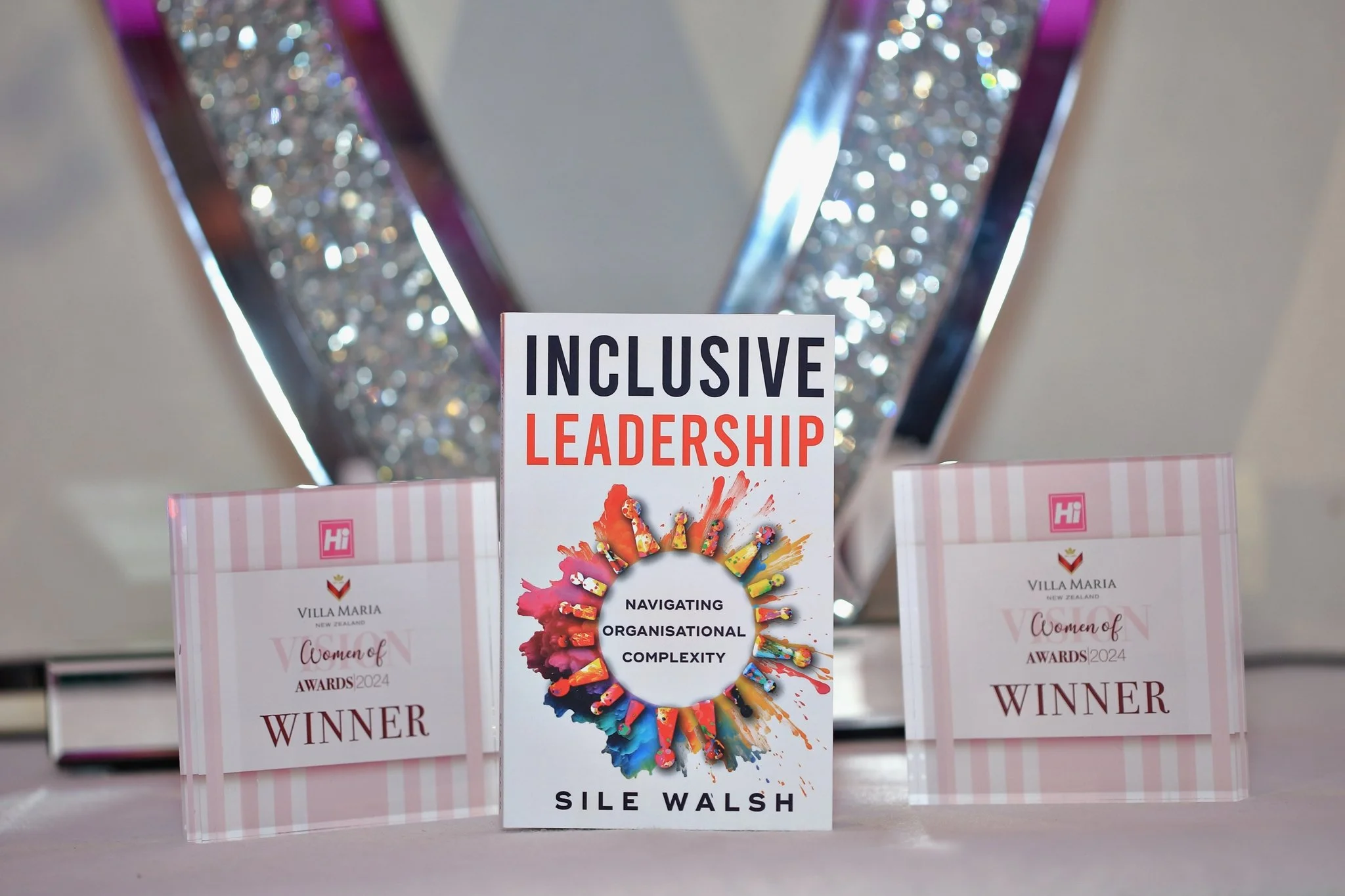
This is precisely the approach we take in Inclusive Leadership: Navigating Organisational Complexity (Walsh, 2024). The book examines how leaders can work with, rather than against, the inherent complexity of organisational systems to build cultures where both performance and belonging are sustained. It draws on coaching psychology, systems thinking, and over a decade of applied practice to offer a framework that is both academically grounded and immediately applicable. For leaders exploring this topic through reading, it serves as both a standalone guide and a lens through which to evaluate other resources on the list.
For those who want a practical starting point before committing to a longer reading programme, our Inclusive Leaders Pocket Guide offers a structured, action-oriented resource designed for leaders moving from intent to impact. It distils core principles from the Include-Performance Framework™ into a format that supports immediate application.
The best books on inclusive leadership treat inclusion as a performance variable embedded in organisational systems, not a standalone compliance topic.
Evaluate reading through clear criteria: evidence base, attention to complexity, practical application, and psychological depth.
Awareness without structured reflection and application does not produce leadership change.
Inclusive leadership is not separate from effective leadership; the strongest resources integrate the two.
Reading across perspectives, systems thinking, psychology, strategy, and lived experience, builds a more complete and actionable understanding.
If you are ready to move from reading to structured action, explore our leadership development programmes and resources. For an immediate, practical starting point, download theInclusive Leaders Pocket Guide and begin applying the Include-Performance Framework™ in your own leadership context.
APA 7 references
Amazon UK. (n.d.). Inclusive leadership: Navigating organisational complexity. Amazon.
Buythebook.ie. (n.d.). Inclusive leadership: Navigating organisational complexity.
Coaching 4 Good. (2022). Inclusive leadership: 15 statistics on how it impacts organizations.
Deloitte. (2024). 2024 global human capital trends. Deloitte.
Walsh, S. (2024). Inclusive leadership: Navigating organisational complexity. ELIS