
Leadership as Attunement, Not Control
Introducing the Conscious Relational Impact (CRI) Model™
Leadership practitioner Ciarán Casey introduces the Conscious Relational Impact (CRI) Model™, a powerful reframe of leadership as attunement, trust and intentional connection, not control.
Paul Corke is joined by Ciarán Casey, a leadership practitioner and coach with more than 30 years of senior leadership experience across sectors and international contexts, focused on organisational transformation, culture development, high-performing teams, and navigating the complexity of human systems.
In this conversation, Ciarán introduces the Conscious Relational Impact (CRI) Model™, a relational framework grounded not in control, but in conscious alignment.
At its core is a simple but profound premise: leadership succeeds or fails in the space between people. This shifts leadership away from transactional exchanges and control-based approaches, and towards something more nuanced and impactful.
CRI reframes leadership as attunement, the ability to notice what is happening between people and respond with intention rather than reflex. This is not about adding more tools or techniques. It is about how leaders show up, moment to moment, in relationships.
From control to connection
A key theme emerging from this conversation is that leadership is fundamentally relational, not transactional. Where traditional models often prioritise control, certainty and direction, the CRI Model™ invites leaders to focus on connection, trust and intentionality.
This creates a shift:
From control → to conscious alignment
From reaction → to intentional response
From managing people → to relating with people
Connection, not control, creates lasting impact. When leaders prioritise the relational space, they could begin to build deeper trust, enable stronger collaboration, and create healthier, high-performing cultures.
Leading through complexity with trust and presence
In increasingly complex environments, control-based leadership often reaches its limits. The CRI Model™ offers an alternative, leading through complexity with trust, presence and intentionality. This includes noticing what is happening in the moment, both within yourself and between others, staying present rather than defaulting to habitual reactions, and choosing responses that align with the impact you want to create.
This is where attunement becomes a core leadership capability. Attunement is not passive; it is an active, conscious practice of awareness and choice.
Attunement in high-performing teams and cultures
The conversation highlights the role of attunement in high-performing teams and healthy cultures. When leaders are attuned, they could recognise shifts in energy, trust and engagement, respond to tension before it escalates, and create psychological conditions where people can perform and thrive. This links directly to Leadership 5.0, where performance and inclusion are not separate goals, but interdependent outcomes of how people relate and work together.
A different way of leading
This is a thoughtful and practical episode for leaders who want to move beyond control-based leadership and create deeper trust, stronger teams and more meaningful impact.
The Conscious Relational Impact (CRI) Model™ does not ask leaders to do more. It invites them to be more aware, more intentional, and more relational in how they lead.
And in doing so, it opens up the possibility that high performance is not driven by control, but created through connection.
An insightful conversation for leaders interested in building trust, shaping stronger cultures and creating deeper impact, listen to the complete episode here.
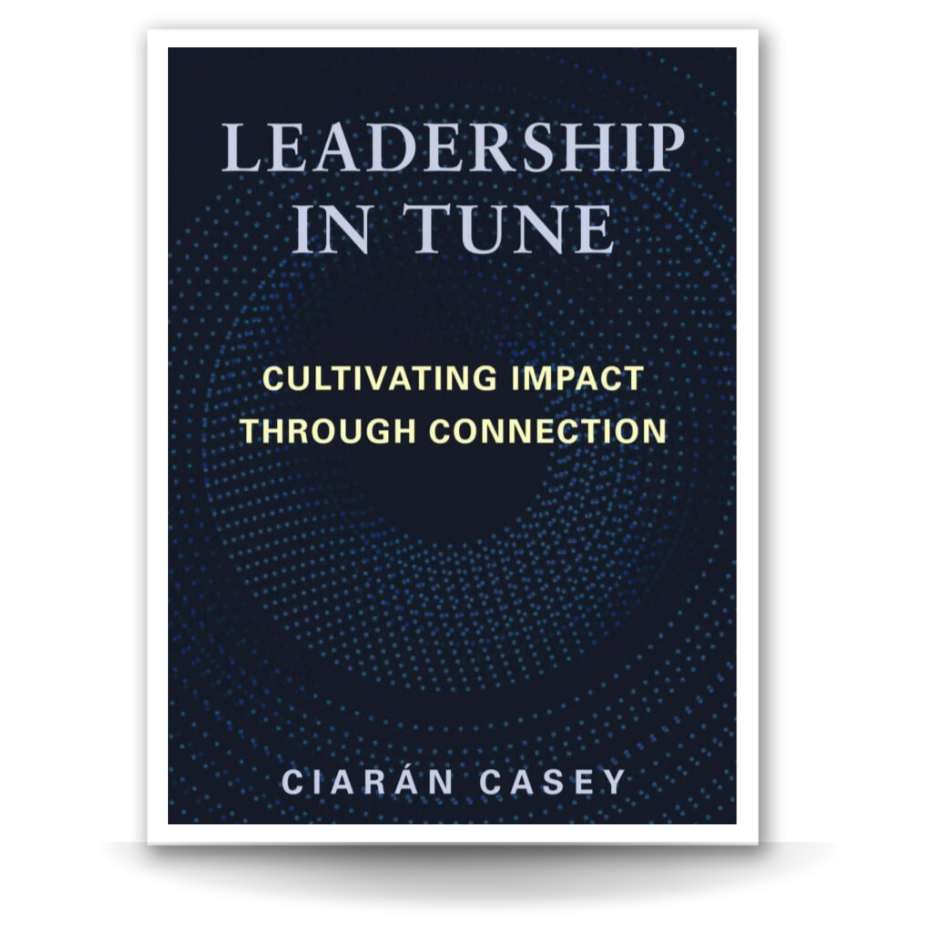
Leadership in Tune will be released on 27th of May.
Curious to explore leadership as attunement, trust and intentional connection? You can pre-order your copy here.